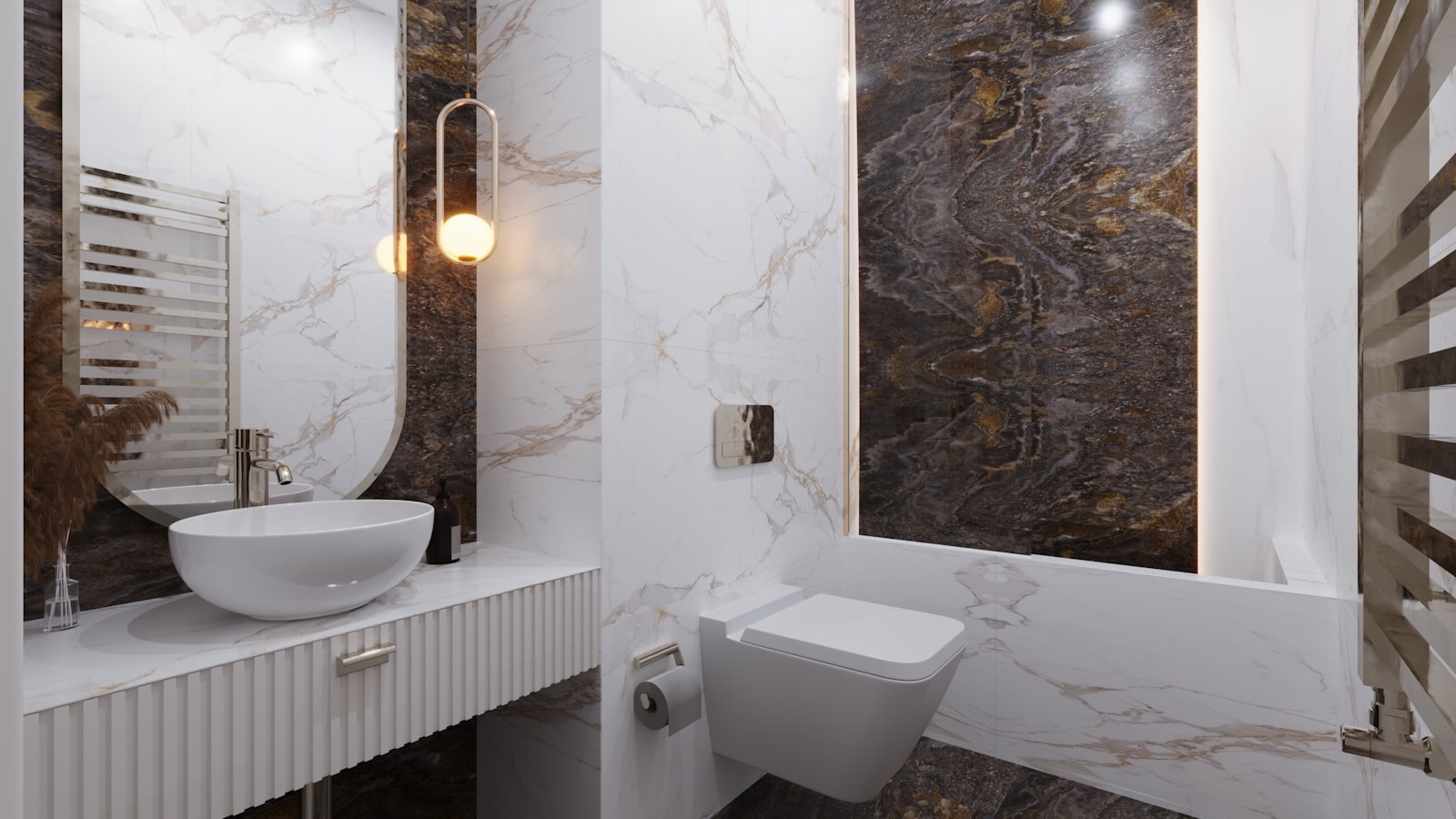
Tiling
Tiling that's laid to the correct fall, over a properly waterproofed base, and finished with grout and sealing that actually lasts.
Bathroom tiling looks straightforward from the outside, but the parts that actually matter, correct falls to the waste outlet, tiling over a membrane without puncturing it, and choosing a tile with the right slip rating for a wet floor, are exactly the parts that are hard to check once the job's finished and the room looks tidy. Getting the fall wrong means water pools instead of draining; getting the slip rating wrong on a floor means a genuinely hazardous, slippery surface.
Tile choice matters more than most people expect too. Porcelain is denser and more water-resistant than ceramic, which is why it's the more common pick for bathroom floors, while ceramic remains a perfectly good, lower-cost option for walls. Larger format tiles reduce grout lines (which is where mould tends to start) but need a flatter substrate to sit properly. A specialist who tiles bathrooms regularly will steer you toward what actually works for your space rather than just what's trending.
Whether you're retiling the whole wet area as part of a bigger job, patching a section after a repair, or simply want a specific tile look sourced and laid by someone who does this as a specialty rather than a side skill, tell us the scope and we'll match you with one specialist who fits.
What's typically included
- Floor and wall tiling for wet areas and the rest of the bathroom
- Coordination with waterproofing so the membrane isn't compromised
- Guidance on tile selection: porcelain vs ceramic, size, and slip rating
- Grouting and sealing finished to last in a wet environment
- Underfloor heating compatibility where relevant
- Slip-rated flooring options for wet floor areas
Frequently asked questions
What slip rating do I need for a bathroom floor?
Wet area floors should carry an appropriate slip resistance rating for the setting, higher for a shower floor than for a dry vanity area. Your matched specialist will recommend a suitable rating for each part of the room rather than using one tile throughout regardless of where it sits.
Can you tile over existing tiles?
Sometimes, if the existing tiles and waterproofing underneath are sound and firmly bonded, but it's not the default recommendation for a wet area, since it can trap moisture issues underneath rather than fixing them. A specialist will check the substrate before proposing this over a full strip-back.
How long does tiling need to cure before the bathroom can be used?
Grout typically needs around 24 to 48 hours before light use, and longer before the shower gets regular heavy use, depending on the products used and local conditions. Your matched specialist will give you exact timing for the materials they've used on your job.
Related
Other services worth a look
Complete Renovations
Full-service bathroom renovations from design through to the last tile, matched to one specialist who runs the whole job.
Learn moreBathroom Makeovers
Cosmetic refreshes: new vanity, tiling, and fittings, without moving plumbing or walls.
Learn moreShower Replacements
Swap a tired or leaking shower for a walk-in, framed, or frameless option, done right the first time.
Learn moreWhere we match
Tiling across New Zealand
Ready to get matched with a bathroom specialist?
Two minutes on the form, and your enquiry goes to one vetted local specialist. No call centre, no five-way bidding war.
Get a Free Quote